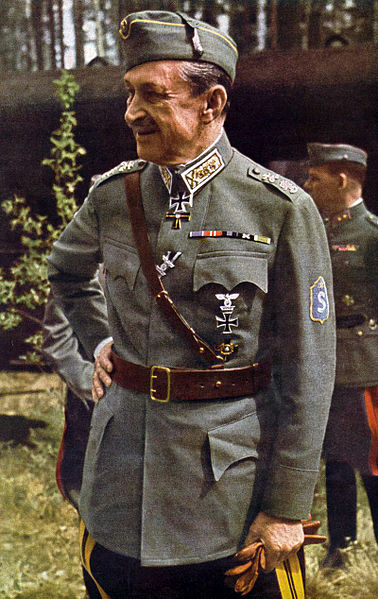
On December 6th Finland celebrates her 92nd Independence Day. This week seventy years ago Soviet Russia attacked Finland without declaring a war. This widely condemned aggression became known as the Finnish Winter War. Mannerheim's role was paramount for tiny Finland in getting her independence in 1917 and maintaining it during WWII when fighting against a giant but brutal super nation. Marshal Mannerheim served also as the President of Republic in 1944-46.
A Finnish author wrote the novel "My grandma and Mannerheim". My junction with Mannerheim and Finnish military history happened several times during the past decade when participating in Otava jazz camp and Happy Jazz Festival. The camp accommodation is in Otava Junior College's dormitory where Field Marshal's headquarters were located during the months of the Winter War. Mannerheim's humble office is still maintained in the dormitory as a small scale museum. From 1941 the Army HQ was again located in St. Michael.
Otava is nowadays a borough in the town of St. Michael in Finland. I was directed to a blog by three young St. Michael authors: Mannerheim Darkroom: The statue issue. Apparently, there was a fuzz in the town about fairly recent relocation of Mannerheim's statue to a less visible, obscure location. I could not help writing a few personal comments.
Happy Independence Day,
JW: What was your first instrument? LN: The violin. My dad was my teacher. He was born in Russia and had attended the St. Petersburg Conservatory with Jascha Heifetz. It was a strict place. If a kid played a wrong note, they would hit him over the knuckles with a ruler.
JW:Was your dad a good teacher? LN: My dad was a great violinist but had no patience for kids who didn’t get it immediately. With the violin, you hold your thumb arching backward so your fingers can reach all the strings and you can play fast. My thumb would creep over the instrument’s neck. My father kept telling me to keep my thumb down. One day he hit my thumb and the violin fell and cracked. That was it for violin lessons [laughs].
JW: In school, what did you play? LN: In grade school, my music teacher urged me to play the oboe because the orchestra needed one. It was still the Depression. I told my teacher that I didn’t think my family could afford one. So the teacher gave me an oboe that belonged to the school. I started to play the instrument little by little. I was a ferocious practicer. Violin lessons had taught me about playing and helped me learn other instruments quickly.
JW: How did you become interested in jazz?
LN: By listening to the big bands. I liked Harry James, and when I heard tenor saxophonist Corky Corcoran play The Mole in 1942, I wanted to play the tenor saxophone. My father was in shock. He said, “The saxophone! You play either the piano or violin, not the saxophone. You’ll wind up playing in a house of prostitution” [laughs] Actually he was right. I did play in small funky clubs later.
JW: Did you buy a tenor? LN: I tried. I worked in a restaurant at a local Grant's, which was like Woolworth's. I'd collect the dishes and put them on a dumbwaiter that I raised to get the dishes washed. I made a few bucks that way. When I thought I had saved enough, I went to the music store and asked about a tenor sax. The man said it was $125. So I asked the price of the Martin alto saxophone that was there, too. He said $75. So I bought it and became an alto player.
I have a special relationship with Lennie Niehaus. I have played through all his three Jazz Etude books:
The saxophone quartet, Sax4fun where I play has bought several Lennie Niehaus' jazz compositions arranged for the saxophone (SATB) quartet. These are in a way etudes, but very melodic and brilliantly harmonized. They vary from easier one to very demanding like Lennie's jazz etude books above. We have found then very educational, and have performed them publicly, too.
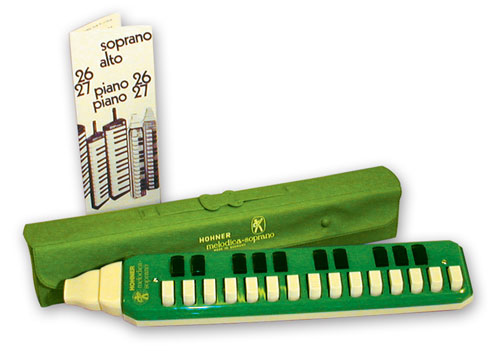
As a youngster I knew nothing of Mr. Niehaus although I should have. I played harmonica and Hohner Melodica (both soprano and alto) as a kid. A neighborhood boy had a clarinet, but never learned to play it. At fourteen I made enough money in my summer job to buy it off from him. I joined my high school (HKYL) band and a student driven folk music ensemble.
Pekka, my classmate and the leader of the folk music band, was a gifted violinist. He wanted to start a jazz band in the school and bought a brand new alto saxophone. I certainly wanted to join the fun. At fifteen I made enough money in a summer job to buy a used Toneking tenor saxophone. Sometimes that Czech-made horn was more a hinder than help. I still own it, although it is no more playable. But the rest is history...
By BRETT HOLTON, Associated Press Writer Brett Holton, Associated Press Writer – Fri Jul 10, 9:33 am ET
MOSCOW – A Russian TV channel cut a segment of the ribald U.S. cartoon comedy "South Park" that appeared to mock Vladimir Putin, a spokesman said Friday. The channel "2X2" cut material from the show that aired Tuesday portraying Putin as a greedy and desperate leader, the network's spokesman said. The decision prompted criticism and furious discussion on Russia blogs. (Bolding by the editor)
In my earlier blog I already predicted that the dogs and their masters will start to resemble each other over time.
The above is very interesting blog post by Alexei Zoubov, now an American jazz musician. In that Alexei writes:
"Nevertheless, the image of a soup kitchen (or bread line) pops out in my mind at jams more and more often lately.
I guess that has partially to do with the present bad economic situation. There are less and less gigs, especially jazz gigs, less and less jazz clubs. And the expansion of jazz education produces more and more young players that just can’t find any spots to play jazz.
Except for jam sessions. These are the places where hungry for playing jazz musicians can get their “bowl of jazz soup” for free, or “at a reasonably low price” (see the definition of a soup kitchen above).
They sign up on a list, sometimes pay $5 or so (nothing bad about that, the money goes to the house rhythm section) and thus form a line to play a few choruses in a couple of songs."
Tuukka (gt) and Harri (t-sax) in Bar Mendocino on Nov. 12, 2008 (picture by by Bluespekko)
I go to jam sessions quite often in Helsinki area. Never happened that I have to pay to play, although in one place there is a great pressure to buy raffle tickets (5 euros each) to cover the house band. In many places the jam players get free beer or beverages.
The jam places where I played recently are:
"I strongly believe that a really enjoyable and satisfying jam session, the one that expands music ideas and creates new music should have some threshold, the minimum level of musicianship accepted.
It is practically impossible when the musicians are required to pay to participate, then everyone that pays has the right to play. There are always people that abuse this right and subject other players and the audience to extreme suffering, sometimes raising to the level of torture - you know what I mean.
I guess Russians are rude compared to Americans. At the jams back in Russia you could often see a musician being taken of the stage by the sleeve and told to go home and practice. They did that to me when I just started and it sometimes made me cry, but in the end it did me a lot of good."
I guess the Finnish jam organizers are more polite or perhaps more tolerant. In any case both players and the organizers should read the Jam Session Etiquette by Grant Koeller.
How many mpc should one have?
-
I know if you have a good mpc you really don’t need any more to have but
when I see pictures and read stories about Coltrane,Sanders and others
having 100 ...