Showing posts with label learning. Show all posts

Thursday, November 12, 2009

Lennie and Me - How I became a saxophone player?

This is an excerpt of the Interview: Lennie Niehaus (LN) by JazzWax (JW)


JW: What was your first instrument?
LN: The violin. My dad was my teacher. He was born in Russia and had attended the St. Petersburg Conservatory with Jascha Heifetz. It was a strict place. If a kid played a wrong note, they would hit him over the knuckles with a ruler.

JW:Was your dad a good teacher?
LN: My dad was a great violinist but had no patience for kids who didn’t get it immediately. With the violin, you hold your thumb arching backward so your fingers can reach all the strings and you can play fast. My thumb would creep over the instrument’s neck. My father kept telling me to keep my thumb down. One day he hit my thumb and the violin fell and cracked. That was it for violin lessons [laughs].

JW: In school, what did you play?
LN: In grade school, my music teacher urged me to play the oboe because the orchestra needed one. It was still the Depression. I told my teacher that I didn’t think my family could afford one. So the teacher gave me an oboe that belonged to the school. I started to play the instrument little by little. I was a ferocious practicer. Violin lessons had taught me about playing and helped me learn other instruments quickly.

JW: How did you become interested in jazz?
LN: By listening to the big bands. I liked Harry James, and when I heard tenor saxophonist Corky Corcoran play The Mole in 1942, I wanted to play the tenor saxophone. My father was in shock. He said, “The saxophone! You play either the piano or violin, not the saxophone. You’ll wind up playing in a house of prostitution” [laughs] Actually he was right. I did play in small funky clubs later.

JW: Did you buy a tenor?
LN: I tried. I worked in a restaurant at a local Grant's, which was like Woolworth's. I'd collect the dishes and put them on a dumbwaiter that I raised to get the dishes washed. I made a few bucks that way. When I thought I had saved enough, I went to the music store and asked about a tenor sax. The man said it was $125. So I asked the price of the Martin alto saxophone that was there, too. He said $75. So I bought it and became an alto player.


I have a special relationship with Lennie Niehaus. I have played through all his three Jazz Etude books:


The saxophone quartet, Sax4fun where I play has bought several Lennie Niehaus' jazz compositions arranged for the saxophone (SATB) quartet. These are in a way etudes, but very melodic and brilliantly harmonized. They vary from easier one to very demanding like Lennie's jazz etude books above. We have found then very educational, and have performed them publicly, too.
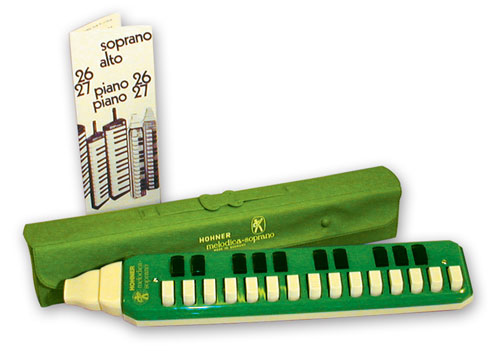
As a youngster I knew nothing of Mr. Niehaus although I should have. I played harmonica and Hohner Melodica (both soprano and alto) as a kid. A neighborhood boy had a clarinet, but never learned to play it. At fourteen I made enough money in my summer job to buy it off from him. I joined my high school (HKYL) band and a student driven folk music ensemble.

Pekka, my classmate and the leader of the folk music band, was a gifted violinist. He wanted to start a jazz band in the school and bought a brand new alto saxophone. I certainly wanted to join the fun. At fifteen I made enough money in a summer job to buy a used Toneking tenor saxophone. Sometimes that Czech-made horn was more a hinder than help. I still own it, although it is no more playable. But the rest is history...

Sunday, October 18, 2009

Tim Price on How To Find Your Saxophone Sound


My good friend, Tim Price authored a comprehensive set of Jazz Lessons and Etudes for my web site, Sax on the Web.

Tim is a Selmer Clinician, professional musician, jazz journalist and author. He teaches in New York City and Pennsylvania.

While at Berklee, he studied with Charlie Mariano, as well as with Andy McGhee, Joe Viola, and Nick Ciazza. After Berklee he studied saxophone and improvisation with Sal Nistico, Fred Lipsius, Jimmy Lyons, Ray Pizzi, Sonny Stitt, and Ronnie Cuber; flute with Harold Jones; clarinet with Kal Opperman and bassoon with Karen Borca.

Tim Price's web site.

In the following video Tim is addressing the eternal question: How to develop your saxophone sound?


Friday, July 17, 2009

Q & A #3: Saxophone playing and life-long learning

Writes "ten man" in Sax on the Web Forum:

Old people don't have to think ... cuz they don't NEED to
... and because it hurts.

considering this "thinking" thing again, ... I'd like to ask a question, but let me explain 1st...

I've worked In my field (electronic Industry) about 27yrs. when younger, I was ambitious to learn and and acquire knowledge. old folks used to annoy me because they seemed to be mentally stagnant and not concerned - even resistant to learn. now that I'm reaching Into my middle ages, I'm starting to understand the complexity of the reasons behind such attitude and behavior.

I saw a tv special about the brain, and it mentioned that babies have gobs of [brain connections], but many of those are lost as the baby grows, leaving and strengthening only the ones that are used. It mentioned how things slow down In the aged, but mentioned the brain's capability to use the channels it has formed for other uses If trained/forced (given time).

I am not so enthusiastic about my career field anymore. I don't meet many *mature* follks that are. when I have to learn new stuff, my brain (and body) gets noticeably tired faster. however, I can use what I already know very proficiently and competitively - better than the younger folks.

there was a story about a guy that was blind since his youth, then got his sight back at around 40ish. wasn't that simple. he talked about how just being able to see doesn't mean you know what, how to comprehend, or how to respond to what you're seeing. his brain had not been trained to do such. he still used a stick to walk - he couldn't comprehend depth preception by sight (yet). he said the learning was slow and difficult (but he was glad).

also, the brain doesn't have to take time to think about what it already knows, allowing use of such knowledge with little or no effort andd allowing energy/time to use other thought process (or none).

QUESTION: how do you feel about learning new playing skills versus just playing? are you excited about music? how old are you and how long have you been playing? Is it a paying carrier for you? and ... when improvising, how do you think/feel?
 
 Harri answers: This is a good topic, albeit quite a broad one.

I'd like to approach it from the viewing angle of my personal experiences.

I was in my mid-40s when I first time received individual training in saxophone playing. It was during a 10-day summer music camp, perhaps 30 minutes a day. When I went there next summer, the sax teacher remembered me and said: "It is amazing that one is able to advance at your age." I know he meant well, I am still a good friend with him. But first I felt kind of hurt, I was still under fifty and felt that I still can conquer the whole world.

Many community bands and big bands in which I have played since then have a lot of the players close to retirement age and above above it. It is amusing, and sometimes sad to observe fellow players in amateur band rehearsals. When the conductor is instructing one section, the players in other sections are having idle talk at the same time. Instead they could have been listening the wisdom coming from the mouth of a paid professional, because they are bound phase the same issue later on.

Of cause there are individual differences. Some players feel that they know already everything worthwhile of knowing whereas some others (minority) are open for new ideas. Perhaps the educational background has something to do with this. People who had to participate in "life long learning" in order to cope in their working lives, may have more aptitude for learning more.

That's by two-bits for the moment. 
I'm 58 and my experience with learning may be the opposite of ten man, if I understand what he said. I'm far more motivated to learn and meet challenges now than when I was in my early '20s. Back then I did go to University and earn a Masters degree in geology, etc, etc, but a lot of the time I was 'going through the motions' of learning rather than fully engaged in it. And more interested in, shall we say, extracurricular, less productive activities. Nowadays I find everything more interesting than I did then.

Regarding music, I'm more motivated now than previously, maybe because I have seen some results. I can't say I'm making a career out of music, but I do paying gigs regularly. Do I think when improvising? Sometimes, but probably my best playing is 'beyond thinking' and more intuitive. The thinking goes on more during practice sessions. When I show up for the gig, I just play.

Whether my brain works any better now than when I was younger, I don't know. But I do think the more you use it, the better. There have been studies that show the brain is highly adaptable and new pathways can be forged well into old age. I suspect it's a "use it or lose it" type of thing. And that might be a good argument for continuing to learn and play music right up to the end...


Digg!
Technorati Tags: , , , ,

Sunday, August 03, 2008

Otava Jazz Camp 2008


Spent last week again at Otava Jazz Camp as I have done since 1996 missing only a couple of summers. Otavan Opisto (a junior college) is located in St. Michaels, Finland and the natives are friendly. The college personnel are very helpful and want to create a pleasant environment for jazz studies.

The student group consisted of some 50 players and singers divided into six combos. And the singers had an a Capella nonet, too. I knew most of the students from the past courses although there were some newcomers, too. There was plenty of laughing and good spirits as before.

The theme for this course was "time". The topic was competently introduced by the course leader Wade Mikkola and visiting teacher from Canada, Alan Matheson. I had a chance to talk with Alan several times. He also gave a clinic to all wind players together with trombonist Pekka Leander. Alan is a very pleasant and interesting person besides being a top-notch musician, composer and arranger.

Wade
Wade Mikkola, bass
Alan
Alan Matheson, trp and piano

I was placed in a group coached by pianist Lasse Hirvi. Lasse was new at Otava, but demonstrated his skills and experience very fast. He was a patient teacher who found ways to get his message across and get the program ready for the performance.

At Wednesday night we performed in the nearby Kissakoski restaurant three pieces:
  • D.C. Farewell by Richie Cole
  • Them There Eyes (with vocalist Helena Tuokkola)
  • Our delight by Tadd Dameron
The performance was well received and the audience acknowledged the solos, too. In this combo we had:
Mikko Heikkinen, accordion
Matti Haatanen, vibraphone
Jouko Lahtiranta, drums
Antti Teinilä, bass
Veli-Pekka Kuuranne, trumpet
Hannu Luukannel, trombone and
Harri Rautiainen, alto and tenor sax

TuuliOverall the week was hard work, but also plenty of fun. I think that the results and standards were raised from the year before. The course secretary Tuuli Mäenpää took care of all possible and impossible requests; my thanks to Tuuli (on the left).

Did I miss something? Yes, a saxophone teacher would have been nice to have there.
Would I go next year again. You bet!