Showing posts with label tenor saxophone. Show all posts

Thursday, November 12, 2009

Lennie and Me - How I became a saxophone player?

This is an excerpt of the Interview: Lennie Niehaus (LN) by JazzWax (JW)


JW: What was your first instrument?
LN: The violin. My dad was my teacher. He was born in Russia and had attended the St. Petersburg Conservatory with Jascha Heifetz. It was a strict place. If a kid played a wrong note, they would hit him over the knuckles with a ruler.

JW:Was your dad a good teacher?
LN: My dad was a great violinist but had no patience for kids who didn’t get it immediately. With the violin, you hold your thumb arching backward so your fingers can reach all the strings and you can play fast. My thumb would creep over the instrument’s neck. My father kept telling me to keep my thumb down. One day he hit my thumb and the violin fell and cracked. That was it for violin lessons [laughs].

JW: In school, what did you play?
LN: In grade school, my music teacher urged me to play the oboe because the orchestra needed one. It was still the Depression. I told my teacher that I didn’t think my family could afford one. So the teacher gave me an oboe that belonged to the school. I started to play the instrument little by little. I was a ferocious practicer. Violin lessons had taught me about playing and helped me learn other instruments quickly.

JW: How did you become interested in jazz?
LN: By listening to the big bands. I liked Harry James, and when I heard tenor saxophonist Corky Corcoran play The Mole in 1942, I wanted to play the tenor saxophone. My father was in shock. He said, “The saxophone! You play either the piano or violin, not the saxophone. You’ll wind up playing in a house of prostitution” [laughs] Actually he was right. I did play in small funky clubs later.

JW: Did you buy a tenor?
LN: I tried. I worked in a restaurant at a local Grant's, which was like Woolworth's. I'd collect the dishes and put them on a dumbwaiter that I raised to get the dishes washed. I made a few bucks that way. When I thought I had saved enough, I went to the music store and asked about a tenor sax. The man said it was $125. So I asked the price of the Martin alto saxophone that was there, too. He said $75. So I bought it and became an alto player.


I have a special relationship with Lennie Niehaus. I have played through all his three Jazz Etude books:


The saxophone quartet, Sax4fun where I play has bought several Lennie Niehaus' jazz compositions arranged for the saxophone (SATB) quartet. These are in a way etudes, but very melodic and brilliantly harmonized. They vary from easier one to very demanding like Lennie's jazz etude books above. We have found then very educational, and have performed them publicly, too.
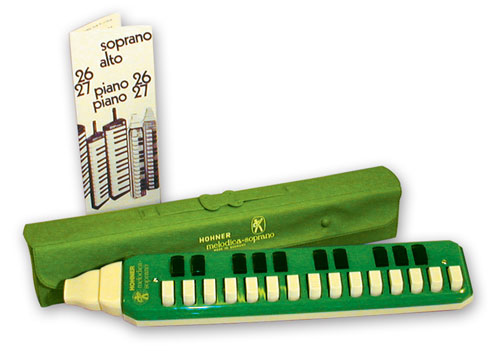
As a youngster I knew nothing of Mr. Niehaus although I should have. I played harmonica and Hohner Melodica (both soprano and alto) as a kid. A neighborhood boy had a clarinet, but never learned to play it. At fourteen I made enough money in my summer job to buy it off from him. I joined my high school (HKYL) band and a student driven folk music ensemble.

Pekka, my classmate and the leader of the folk music band, was a gifted violinist. He wanted to start a jazz band in the school and bought a brand new alto saxophone. I certainly wanted to join the fun. At fifteen I made enough money in a summer job to buy a used Toneking tenor saxophone. Sometimes that Czech-made horn was more a hinder than help. I still own it, although it is no more playable. But the rest is history...

Saturday, October 24, 2009

Jon R. Smith: White Trash, Michael Brecker, Philip Glass

"I used to occasionally hang out with Mike Brecker in NYC. We would both be sitting in with Paula Lockhart who had Howie Wyeth playing drums…Brecker told me that two of his favorite players were Jim Pepper and Jon Smith."

“Jon’s sound is instantaneously recognized, something only a handful of players have, with a tone that’s as big as a house, and a big vibrato that’s characteristic of a gospel singers…If I were putting together a horn section, Jon would be my absolute first choice.”
Edgar Winter
Windplayer Magazine


In Part One of an exclusive interview with SOTW, legendary sax great Jon R. Smith discusses his career and influences, including the early days in New Orleans, great sax players from Louisiana and Texas, the formation of Edgar Winter's "White Trash", meeting Michael Brecker, group dynamics, ego and solos, Philip Glass and more...

This two-part interview is adding up to other Sax on the Web interviews by Neil Sharpe.
There are several mp3-files and music videos from Jon's early career. 

One tidbit from the interview:
White Trash

A lot of the music business is about being in the right place at the right time. Usually that means a lot of hard work to put yourself in that position but, sometimes, lady luck can make a big difference. I was coming out of a music store in New York City, when I ran into my old buddies Edgar Winter and Jerry Lacroix. Seems that Edgar’s brother, the terrific blues guitarist Johnny Winter, had got them an audition which led to a recording contract with Clive Davis and Epic Records. They asked if I’d be interested in joining the band. A three-story house had been rented in Woodstock, New York. Halfway through the question, I’d already started to pack!


“I have followed him since he left Edgar Winter’s White Trash…I couldn’t leave Antone’s until I knew he’d played his last note of the night.”
Will Lee
Late Night with David Letterman Band
Austin American-Statesman 


“Never mind the superlatives, [Jon Smith plays] some of the highest caliber blues to be found…One longtime blues veteran compared his playing to Cannonball Adderley, saying ‘Smith is so good, he’s almost out of control’.”
Austin Chronicle


Sunday, October 18, 2009

Tim Price on How To Find Your Saxophone Sound


My good friend, Tim Price authored a comprehensive set of Jazz Lessons and Etudes for my web site, Sax on the Web.

Tim is a Selmer Clinician, professional musician, jazz journalist and author. He teaches in New York City and Pennsylvania.

While at Berklee, he studied with Charlie Mariano, as well as with Andy McGhee, Joe Viola, and Nick Ciazza. After Berklee he studied saxophone and improvisation with Sal Nistico, Fred Lipsius, Jimmy Lyons, Ray Pizzi, Sonny Stitt, and Ronnie Cuber; flute with Harold Jones; clarinet with Kal Opperman and bassoon with Karen Borca.

Tim Price's web site.

In the following video Tim is addressing the eternal question: How to develop your saxophone sound?


Tuesday, August 25, 2009

Lester Young — A Centennial Tribute


For the lyricists of the Great American Songbook, it was difficult enough to say "I love you" in 32 bars, ­expressing all that passion and profundity in one brief chorus. Yet when the legendary tenor saxophonist Lester Young played those same songs, he crammed even more artistry into that same small space. When Young (1909-1959) plays a chorus of a ballad—or a blues or a riff number—you hear more than "I love you." You hear babies gurgling, flowers blooming, couples making love, dogs barking, mothers crying to their kids, worlds colliding.

Young, whose centennial ­arrives on Aug. 27, created a new approach to the saxophone and to jazz in general. His playing was, by turns, lighter and gentler than anything that had come before it, but also capable of driving with tremendous force and energy.

His 1943 solo on "Sometimes I'm Happy," made shortly after Young's return to the Count Basie Orchestra, is a prime ­example of the President (usually shortened to "Prez")—as Billie Holiday called Young—touching on every emotion known to man in a single, short solo. He's obviously ­inspired by Irving Caesar's title and lyric as much as he is by Vincent Youmans' melody. Most popular songs present the states of "happy" and "sad" as monolithic poles of feeling, but Young seems to be jazzed by the way that Caesar and Youmans mix both together. His ­interpretation of the tune is both at the same time, a constant state of melancholic ­euphoria.

The song is in ABAB form, meaning that the second 16 bars are a repeat, melodically, of the first, and Young uses that as an impetus to inject more jazzy variations into the second half. Even at the tail end of the first "B," the part that matches the words "If I can find the sun in your eyes," Young weaves in an amazing embellishment, a two-bar phrase that could be the ­basis for a song in itself, but, more important, perfectly compliments the Youmans melody. After bassist Slam Stewart's ­simultaneous bowing-and-humming episode and pianist Johnny Guarnieri's brief statement, Prez returns with an amazing coda that's almost completely improvised, except that it uses a phrase from "My Sweetie Went Away" (a 1923 pop song recorded by Bessie Smith) as a point of departure. This lick had a life of its own: It not only also turns up in the verse to Cole Porter's "Let's Do It, Let's Fall in Love," but Young had used it earlier in "Here It Is Tomorrow Again," and it was later heard in deference to Prez by Gerry Mulligan ("Jeru"), Stan Getz ("Yesterdays") and King Pleasure and Oscar Peterson in their own tribute versions of "Sometimes I'm Happy."

Small wonder that Young was a major influence not just as an improviser but as an ­interpreter. A whole school of tenor saxophonists identified themselves as virtual vice presidents, including Getz, Wardell Gray and Paul Quinichette (who even billed himself as such). But Young exerted an equally pervasive influence on several generations of jazz and popular singers, both directly and through such key acolytes as Holiday and Frank Sinatra, who told ­Arlene Francis in 1981: "I knew Lester well, we were close friends and we had a mutual ­admiration society. I took from what he did and he took from what I did." Sinatra also praised Young for "knowing the lyrics" to the songs that he played: "knowing what the song is about has to come from the lyric, not merely notes on a piece of paper."

Will Friedwald writes about jazz for the WSJ. Printed in The Wall Street Journal, page D9, Aug. 19, 2009

" You Got to Be Original, Man! "

Tim Price here, for RICO REEDS, talking about some things on my mind lately.

We have all remarked when an innocent child speaks their mind and reveals something candid, with no worries about consequences, failure, or judgment that makes us think. We also know there is something envious about that special quality; raw freedom to express with no fears or hang-ups. When a young student drums on a desk, draws on a paper, or sings, sincerity is at its best. And it’s all valid because it’s sincere.

Our attraction to music is a personal one. Sure, there are peer pressures, and multi musical purposes, but somewhere in our hearts we have our own musical tastes. To step forward and play what you feel might be your best move.I feel it’s tragic to not explore music and life through creativity and self development. I respect the ideal of traditional development of needed musical skills but not at the cost of creativity. No one should have to wait some undetermined amount of time to compose something or even think about composing something.Ditto with improvisation. Same with any writing or art. It’s sincere. It’s in the moment.

The path of a true "artist" is a rocky road. It's like walking up wet glass at times but after a while it's fun.It is your business to keep the channel open.You have to keep open and aware directly to the urges that motivate you.You'll note a slow emergence almost imperceptible. it will be something you never forget.

Now's the time tell a genuine story, speak the truth, and someone will appreciate it.It is part and parcel of being an artist.

Keep the channel open, and try your best.You'll learn something special.

The quote at the beginning of this weeks blog was from Lester Young. If you want to hear something original-check out Lester Young.

I'll be talking more about ~stepping forward~ and taking your chances. Now's the time.

Till next week, thanks for reading this blog and keep on your path.
~ Tim Price ( forum admin. for Rico Reeds ). Tim is also a Sax on the Web author.
Reblog this post [with Zemanta]


Amazon's Lester Young Store
Lester Young in Sax on the Web

Thursday, July 09, 2009

Q & A #2: Transposing for Bb for tenor saxophone

Jimbo:
If the music is transposed for Bb for tenor sax, then up an octave, do the notes wind up floating way above the staff? Would a middle C turn into a D way above, with a stack of short little lines under it. Would that make it harder to learn to read those notes??
Harri:
Jimbo,
you are correct. If you wanted the tenor saxophone to sound in same pitch, you will write a ninth (octave plus one) higher.

However, often one wants to use the register of tenor that is normally played. Then you transpose only a major second higher. In that case the tenor will sound octave lower than the original music in concert C.

Source:


Asker's Rating:

4 out of 5

Asker's Comment:
Thanks for the explanation, and the interesting web link.


Digg!

Saturday, July 04, 2009

Folk Music, Blues and good times in Sastamala

Dr. Shinichi Suzuki

Hotel Ellivuori was the venue for the 23rd Annual Suzuki music camp organized by the Finnish Suzuki Association in the town of Sastamala (before known as Vammala).

The Suzuki approach was developed in Japan by Dr. Shinichi Suzuki in the mid 20th Century. He believed that every child, if properly taught, was capable of a high level of musical achievement. His philosophy was that if every child has the inborn ability to learn their native language, then they also have the ability to learn and become proficient on a musical instrument. Begin children early and excite their own inborn joy of music, or the mother tongue approach.

In Sastamala were about one hundred young players with their parents and teachers representing violin, cello, flute and vocal as instruments.  (In the picture Ida Rautiainen, flute and teacher Marttiina Ahlström.)The week (June 28 – July 3, 2009) was packed with individual lessons, group practice and ensemble work. Also, a chance to enjoy outside activities and swimming in the pool or in the lake. The weather was warm and sunny the whole week.

Some special highlights:


On Wednesday night was a traditional Teachers’ Concert in the medieval Sastamala Church. The program consisted of fine performances by the Chamber Orchestra, flute, violin, guitar and singing. There was also Mauno Järvelä’s (left in picture) Folk Music Ensemble:


Thursday evening concert consisted of some traditional events and some new and perhaps surprising parts.  Marjukka, the camp Director, asked me to introduce the saxophone which does not belong to the family Suzuki instruments. The sound of saxophone was not heard in these events earlier. I did it by playing the old swing tune “” by Myron C. Bradshaw, Edward Johnson and Bobby Plater. The comp section was Venla, double bass (in the picture) and Pilvi, organ. Thanks to these ladies, the trio was well received by the audience. I also assisted by playing in “Fathers’ Choir” which this time did not sing at all, but produced a very funny act with music and magic tricks.

The big hit was the huge folk music Orchestra directed and rehearsed by Mauno Järvelä and his violinist daughters. I played there also tenor saxophone and Ida sang and played flute. A huge hit with the audience was Mauno’s blues “Pääoma (Das Kapital)”. Ida’s favorite was “Ismon Grilli (Ismo’s Fast Food Diner)” with a catchy melody and fast tempo.


The camp was successfully concluded on Friday afternoon with the Grande Finale Concert where each instrument group performed several pieces.  Leena Mäkilä (above picture, right) was directing the advanced group of flautists. The larger group performed Telemann's Minuet and Suzuki’s Allegro.


Ida Rautiainen and her friend Anna-Liisa (right).


That was a joyous week, thanks to the teachers and organizers. The kids were amazing with their dedication to music and desire to learn more.


Reblog this post [with Zemanta]

Tuesday, April 28, 2009

Carmen Leggio - Young Man With A Horn, RIP

Writes Fred Cicetti on Sax on the Web in 1999:

Carmen Leggio's been playing tenor sax for about six decades and it shows. His small frame is stooped over and his head is bent down a bit. The man was made to play music, so it's fitting that his body has conformed to his gift.

Leggio blows tenor the way Willie Mays ran down a flyball. They both let you know from the get-go that you'll never be able to do it their way.

"I have thousands of songs memorized," Leggio explains with childlike joy and not an eighth note of boasting. "I can hear a song once and know how to play it. In my whole life, I've never bought a piece of sheet music. Saved a lot of money."

Leggio (incredibly, it means "music stand" in Italian) taught himself how to play at the age of nine. He began on clarinet, imitating Artie Shaw on the radio. He still performs "Stardust," "Nightmare" and "Begin the Beguine" on an old King metal clarinet. At 14, he switched to tenor sax and began playing in clubs in his hometown of Tarrytown, a suburb just north of New York City.

"I quit high school, because I knew I was meant to be a musician," he said. "But my father was so angry that he didn't speak to me for years. On his deathbed, he admitted I was right to leave school."

That admission came after Leggio had played with Benny Goodman, Maynard Ferguson, Gene Krupa, Woody Herman, Buddy Rich, Dizzy Gillespie and Doc Severinson. There have also been television shows, movies, the Newport Jazz Festival, Birdland and, yes, Carnegie Hall.

On April 17, 2009, Carmen Leggio suffered a heart attack in front of his home in Tarrytown, NY and died later that day at the age of 81.

What a loss to the saxophone community and jazz.

Writes Tim Price in his blog now:
Carmen Leggio bristled with individuality, whether soaring over a legendary big band like Woody Herman or Maynard or cutting a new path through a standard song like " Smile" his ruggedly magisterial horn made a personal statement the jazz world will never forget.

This player, developed a way to express a wide and subtle range of emotions through a unique and highly evolved level of musicianship, that is never cluttered or forced. One of the masters of original melodic improvisation that melted in your heart like an emotional choclate ball. When he played a ballad you might think he's whispering the greatest story of un-requited love ever told,directly down your spinal column.

Back in the70's I bought the record " Tarrytown Tenor". I got in New York City at King Karol records. At the time, I was wondering why a player like this was not touring the world, recording more and playing every jazz club in NYC and Europe. I played that record everyday, playing along with it and studying the art of Mr. Leggio’s saxophone. I saw him at the Vanguard with That and Mel playing some of the best lead alto I ever heard- just amazing phrasing and soul.

He sure will be missed, and a loss to the world.

RIP Carmen, I'm sure Prez, Sal, Romano and Hawk are waiting in that jam session above for you.

Reblog this post [with Zemanta]

Tuesday, January 13, 2009

Blues/Roots Jam at Bar Mendocino


Yesterday was Monday jam night at Bar Mendocino in Helsinki. I invited Lidia from International friends meeting with me, and she seemed to enjoy herself totally. Looks like this place is a well-kept secret, I only discovered it last fall.

The bands played sturdy blues, rock and roots type music. Even Elvis Presley showed up!!
Other singers colored the atmosphere in 60s, 70s style.

I joined few pieces with my tenor sax where I could manage with blues scale and chords. Because of guitar players some songs had 4-5 sharps for me, but who cares - in blues they are flattened, anyway. :-)

From my musician friends Anders Jansson was there playing keyboard and baritone sax, excellent solos. Hannu Rantanen came later to play bass and Pekka played his trumpet.

Good time was had by everyone, thanks for the accompaniment.


BASICS of ROCK & ROLL for a saxophonist

Sunday, August 03, 2008

Otava Jazz Camp 2008


Spent last week again at Otava Jazz Camp as I have done since 1996 missing only a couple of summers. Otavan Opisto (a junior college) is located in St. Michaels, Finland and the natives are friendly. The college personnel are very helpful and want to create a pleasant environment for jazz studies.

The student group consisted of some 50 players and singers divided into six combos. And the singers had an a Capella nonet, too. I knew most of the students from the past courses although there were some newcomers, too. There was plenty of laughing and good spirits as before.

The theme for this course was "time". The topic was competently introduced by the course leader Wade Mikkola and visiting teacher from Canada, Alan Matheson. I had a chance to talk with Alan several times. He also gave a clinic to all wind players together with trombonist Pekka Leander. Alan is a very pleasant and interesting person besides being a top-notch musician, composer and arranger.

Wade
Wade Mikkola, bass
Alan
Alan Matheson, trp and piano

I was placed in a group coached by pianist Lasse Hirvi. Lasse was new at Otava, but demonstrated his skills and experience very fast. He was a patient teacher who found ways to get his message across and get the program ready for the performance.

At Wednesday night we performed in the nearby Kissakoski restaurant three pieces:
  • D.C. Farewell by Richie Cole
  • Them There Eyes (with vocalist Helena Tuokkola)
  • Our delight by Tadd Dameron
The performance was well received and the audience acknowledged the solos, too. In this combo we had:
Mikko Heikkinen, accordion
Matti Haatanen, vibraphone
Jouko Lahtiranta, drums
Antti Teinilä, bass
Veli-Pekka Kuuranne, trumpet
Hannu Luukannel, trombone and
Harri Rautiainen, alto and tenor sax

TuuliOverall the week was hard work, but also plenty of fun. I think that the results and standards were raised from the year before. The course secretary Tuuli Mäenpää took care of all possible and impossible requests; my thanks to Tuuli (on the left).

Did I miss something? Yes, a saxophone teacher would have been nice to have there.
Would I go next year again. You bet!