Sunday, September 27, 2009

Supa dupa fly: Kathleen Kent's The Heretics Daughter, thoughts and memories, sceneries of the mind

Supa dupa fly: Kathleen Kent's The Heretics Daughter, thoughts and memories, sceneries of the mind

Journal entry of a Finnish immigrant brought up in Middlesex County in the Massachussetts Bay Colony who traveled to Sussex County England

Friday, September 18, 2009

Improvisation Basics 3: Blues Chord Progressions and other Rules

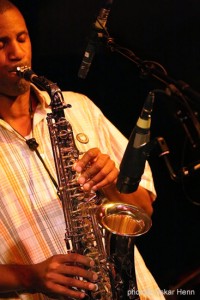
Yoyogi-Park Saxophone Player
Image by haribote via Flickr


Blues and Jazz go very much hand in hand. Starting with Blues is the way to get your feet wet in the difficult but rewarding art of improvising. Our approach is three-pronged:
  1. First familiarize yourself with Basic Blues Chord Progressions by John Lull.
  2. Then absorb the bluesy feeling by listening to .
  3. Then follow the Blues Rules below.


Rules Of The Blues

[There are several versions of these floating around in the net.]

1. Most Blues begin, "Woke up this morning..."

2. "I got a good woman" is a bad way to begin the Blues, unless you stick something nasty in the next line like, "I got a good woman, with the meanest face in town."

3. The Blues is simple. After you get the first line right, repeat it. Then find something that rhymes... sort of: "Got a good woman with the meanest face in town. Yes, I got a good woman with the meanest face in town. Got teeth like Margaret Thatcher, and she weigh 500 pound."

4. The Blues is not about choice. You stuck in a ditch, you stuck in a ditch--ain't no way out.

5. Blues cars: Chevys, Fords, Cadillacs and broken-down trucks. Blues don't travel in Volvos, BMWs, or Sport Utility Vehicles. Most Blues transportation is a Greyhound bus or a southbound train. Jet aircraft and company motor pools ain't even in the running. Walkin' plays a major part in the blues lifestyle. So does fixin' to die.

6. Teenagers can't sing the Blues. They ain't fixin' to die yet. Adults sing the Blues. In Blues, "adulthood" means being old enough to get the electric chair if you shoot a man in Memphis.

7. Blues can take place in New York City but not in Hawaii or any place in Canada. Hard times in Minneapolis or Seattle is probably just clinical depression. Chicago, St. Louis, and Kansas City are still the best places to have the Blues. You cannot have the blues in any place that don't get rain.

8. A man with male pattern baldness ain't the blues. A woman with male pattern baldness is. Breaking your leg cause you were skiing is not the blues. Breaking your leg 'cause a alligator be chompin' on it is.

9. You can't have no Blues in a office or a shopping mall. The lighting is wrong. Go outside to the parking lot or sit by the dumpster.

10. Good places for the Blues:
a. Highway
b. Jailhouse
c. An empty bed
d. Bottom of a whiskey glass

11. Bad places for the Blues:
a. Nordstrom's
b. Gallery openings
c. Ivy league institutions
d. Golf courses

12. No one will believe it's the Blues if you wear a suit, 'less you happen to be a old ethnic person, and you slept in it.

13. You have the right to sing the Blues if:
a. You older than dirt
b. You blind
c. You shot a man in Memphis
d. You can't be satisfied

14. You don't have the right to sing the Blues if:
a. You have all your teeth
b. You were once blind but now can see
c. The man in Memphis lived
d. You have a pension fund

15. Blues is not a matter of color. It's a matter of bad luck. Tiger Woods cannot sing the blues. Sonny Liston could. Ugly white people also got a leg up on the blues.

16. If you ask for water and your darlin' give you gasoline, it's the Blues

17. Other acceptable Blues beverages are:
a. Cheap wine
b. Whiskey or bourbon
c. Muddy water
d. Nasty black coffee

18. The following are NOT Blues beverages:
a. Perrier
b. Chardonnay
c. Snapple
d. Slim Fast

19. If death occurs in a cheap motel or a shotgun shack, it's a Blues death. Stabbed in the back by a jealous lover is another Blues way to die. So is the electric chair, substance abuse and dying lonely on a broke-down cot. You can't have a Blues death if you die during a tennis match or while getting liposuction.

20. Some Blues names for women:
a. Sadie
b. Big Mama
c. Bessie
d. Fat River Dumpling

21. Some Blues names for men:
a. Joe
b. Willie
c. Little Willie
d. Big Willie

22. Persons with names like Michelle, Amber, Debbie, and Heather can't sing the Blues no matter how many men they shoot in Memphis.

23. Make your own Blues name Starter Kit: a. name of physical infirmity (Blind, Cripple, Lame, etc.) b. first name (see above) plus name of fruit (Lemon, Lime, Melon, Kiwi, etc.) c. last name of President (Jefferson, Johnson, Fillmore, etc.) For example: Blind Lime Jefferson, Jackleg Lemon Johnson or Cripple Kiwi Fillmore, etc. (Well, maybe not "Kiwi.")

24. I don't care how tragic your life: if you own even one computer, you cannot sing the blues.


Check out Evan Tate Interview


Title: Evan Tate Interview

Link: http://www.saxstation.com/evan-tate-interview.htm

Thursday, August 27, 2009

Improvisation Basics 2: Blues scales

John A asks:
Can someone tell me how I can play blues and bebop scales? How is each of them different from the original major scales?
Thanks!
Harri R answers:
Start from here:

Pentatonic and blues scales and

Blues and the Dominant Chord

There are more links to scales.

good luck,

Source:

www.saxontheweb.net/

Tuesday, August 25, 2009

Lester Young — A Centennial Tribute


For the lyricists of the Great American Songbook, it was difficult enough to say "I love you" in 32 bars, ­expressing all that passion and profundity in one brief chorus. Yet when the legendary tenor saxophonist Lester Young played those same songs, he crammed even more artistry into that same small space. When Young (1909-1959) plays a chorus of a ballad—or a blues or a riff number—you hear more than "I love you." You hear babies gurgling, flowers blooming, couples making love, dogs barking, mothers crying to their kids, worlds colliding.

Young, whose centennial ­arrives on Aug. 27, created a new approach to the saxophone and to jazz in general. His playing was, by turns, lighter and gentler than anything that had come before it, but also capable of driving with tremendous force and energy.

His 1943 solo on "Sometimes I'm Happy," made shortly after Young's return to the Count Basie Orchestra, is a prime ­example of the President (usually shortened to "Prez")—as Billie Holiday called Young—touching on every emotion known to man in a single, short solo. He's obviously ­inspired by Irving Caesar's title and lyric as much as he is by Vincent Youmans' melody. Most popular songs present the states of "happy" and "sad" as monolithic poles of feeling, but Young seems to be jazzed by the way that Caesar and Youmans mix both together. His ­interpretation of the tune is both at the same time, a constant state of melancholic ­euphoria.

The song is in ABAB form, meaning that the second 16 bars are a repeat, melodically, of the first, and Young uses that as an impetus to inject more jazzy variations into the second half. Even at the tail end of the first "B," the part that matches the words "If I can find the sun in your eyes," Young weaves in an amazing embellishment, a two-bar phrase that could be the ­basis for a song in itself, but, more important, perfectly compliments the Youmans melody. After bassist Slam Stewart's ­simultaneous bowing-and-humming episode and pianist Johnny Guarnieri's brief statement, Prez returns with an amazing coda that's almost completely improvised, except that it uses a phrase from "My Sweetie Went Away" (a 1923 pop song recorded by Bessie Smith) as a point of departure. This lick had a life of its own: It not only also turns up in the verse to Cole Porter's "Let's Do It, Let's Fall in Love," but Young had used it earlier in "Here It Is Tomorrow Again," and it was later heard in deference to Prez by Gerry Mulligan ("Jeru"), Stan Getz ("Yesterdays") and King Pleasure and Oscar Peterson in their own tribute versions of "Sometimes I'm Happy."

Small wonder that Young was a major influence not just as an improviser but as an ­interpreter. A whole school of tenor saxophonists identified themselves as virtual vice presidents, including Getz, Wardell Gray and Paul Quinichette (who even billed himself as such). But Young exerted an equally pervasive influence on several generations of jazz and popular singers, both directly and through such key acolytes as Holiday and Frank Sinatra, who told ­Arlene Francis in 1981: "I knew Lester well, we were close friends and we had a mutual ­admiration society. I took from what he did and he took from what I did." Sinatra also praised Young for "knowing the lyrics" to the songs that he played: "knowing what the song is about has to come from the lyric, not merely notes on a piece of paper."

Will Friedwald writes about jazz for the WSJ. Printed in The Wall Street Journal, page D9, Aug. 19, 2009

" You Got to Be Original, Man! "

Tim Price here, for RICO REEDS, talking about some things on my mind lately.

We have all remarked when an innocent child speaks their mind and reveals something candid, with no worries about consequences, failure, or judgment that makes us think. We also know there is something envious about that special quality; raw freedom to express with no fears or hang-ups. When a young student drums on a desk, draws on a paper, or sings, sincerity is at its best. And it’s all valid because it’s sincere.

Our attraction to music is a personal one. Sure, there are peer pressures, and multi musical purposes, but somewhere in our hearts we have our own musical tastes. To step forward and play what you feel might be your best move.I feel it’s tragic to not explore music and life through creativity and self development. I respect the ideal of traditional development of needed musical skills but not at the cost of creativity. No one should have to wait some undetermined amount of time to compose something or even think about composing something.Ditto with improvisation. Same with any writing or art. It’s sincere. It’s in the moment.

The path of a true "artist" is a rocky road. It's like walking up wet glass at times but after a while it's fun.It is your business to keep the channel open.You have to keep open and aware directly to the urges that motivate you.You'll note a slow emergence almost imperceptible. it will be something you never forget.

Now's the time tell a genuine story, speak the truth, and someone will appreciate it.It is part and parcel of being an artist.

Keep the channel open, and try your best.You'll learn something special.

The quote at the beginning of this weeks blog was from Lester Young. If you want to hear something original-check out Lester Young.

I'll be talking more about ~stepping forward~ and taking your chances. Now's the time.

Till next week, thanks for reading this blog and keep on your path.
~ Tim Price ( forum admin. for Rico Reeds ). Tim is also a Sax on the Web author.
Reblog this post [with Zemanta]


Amazon's Lester Young Store
Lester Young in Sax on the Web

Thursday, August 13, 2009

Ride The Wild Wind - Sonny Del-Rio Interview


Deep gutted. Full chromed. Slammed to the floor.
Supercharged Merc’. Bustin’ for more.
Blue smoke trailing,
Stars tumbling out of the sky,
My wild-eyed passenger screaming,
'I don't wanna die!'

Two weeks under lock and key,
‘Compulsive. Unpredictable’.
That’s what they’d laid on me.
But… a lucky break- an open window, a quick phone call.
Grab the sax. Bail out the car.
Look out Marco's Club, here I come.

People soon will be yelling:
'More! More! More!’'
As my sax gets them jumpin’
across a jammed dance floor.

Turn to my buddy:
‘I'm not trying to kill you, man!
Just getting you ready for some
ROCK N’ ROLL!'
~ Neil Sharpe

Rock n' Roll. Straddling the rhythm-and-blues-powered-engine of change. The music that saved a generation. And not a moment too soon.
Which isn't to say, it went easy…


If I was sick, rock was my medicine. If I was lonely, it was my friend. If I was down, it was my inspiration. It was pure joy, a blessing and…sometimes a curse...

Neil Sharpe Neil Sharpe's (left) Interview of Rock n’Roll saxophonist Sonny Del-Rio, Part One now available.

‘Let The Good Times Roll’ from Sonny’s album “Two Hound Blues”:


Tuesday, August 11, 2009

Is Jazz Dead?

No, it fust smells funny.
~Frank Zappa


Alarming News:

Can Jazz Be Saved?

The audience for America’s great art form is withering away

By TERRY TEACHOUT (AUGUST 9, 2009, Wall Street Journal)

New York
In 1987, Congress passed a joint resolution declaring jazz to be “a rare and valuable national treasure.” Nowadays the music of Louis Armstrong, Duke Ellington, Charlie Parker and Miles Davis is taught in public schools, heard on TV commercials and performed at prestigious venues such as New York’s Lincoln Center, which even runs its own nightclub, Dizzy’s Club Coca-Cola.
Here’s the catch: Nobody’s listening.
No, it’s not quite that bad—but it’s no longer possible for head-in-the-sand types to pretend that the great American art form is economically healthy or that its future looks anything other than bleak.

The bad news came from the National Endowment for the Arts’ latest Survey of ­Public Participation in the Arts, the fourth to be conducted by the NEA (in participation with the U.S. Census Bureau) since 1982. These are the findings that made jazz musicians sit up and take ­notice:
• In 2002, the year of the last survey, 10.8% of adult Americans attended at least one jazz performance. In 2008, that figure fell to 7.8%.
• Not only is the audience for jazz shrinking, but it’s growing older—fast. The median age of adults in America who attended a live jazz performance in 2008 was 46. In 1982 it was 29.
• Older people are also much less likely to attend jazz performances today than they were a few years ago. The percentage of Americans between the ages of 45 and 54 who attended a live jazz performance in 2008 was 9.8%. In 2002, it was 13.9%. That’s a 30% drop in attendance.
• Even among ­college-educated adults, the audience for live jazz has shrunk significantly, to 14.9% in 2008 from 19.4% in 1982.


Monday, August 10, 2009

Color your Saxophone


Once you master your instrument, it is time to get it hand-painted. Look for various designs.


Some other ideas:

Have fun,

Monday, August 03, 2009

Improvisation Basics: The Power of the Pentatonic Scale


Last week I spent at Otava Jazz  Camp in outskirts of St. Michael in Finland. (My last year's blog post - 2009 pictorial story is forthcoming.) The theme for this year was syncopation. Much of the time was spent working in small combos and developing an improvised solo. The cornerstone for a beginning improviser is the Pentatonic Scale:

Bobby McFerrin is one of the natural wonders of the music world. A ten-time Grammy Award winner, he is one of the world's best-known vocal innovators and improvisers, a world-renowned classical conductor, the creator of "Don't Worry Be Happy", one of the most popular songs of the late 20th century, and a passionate spokesman for music education. Here Bobby demonstrates the power of the pentatonic scale, using audience participation, at the event "Notes & Neurons: In Search of the Common Chorus", from the 2009 World Science Festival, June 12, 2009.

More on Pentatonic Scales By John Lull